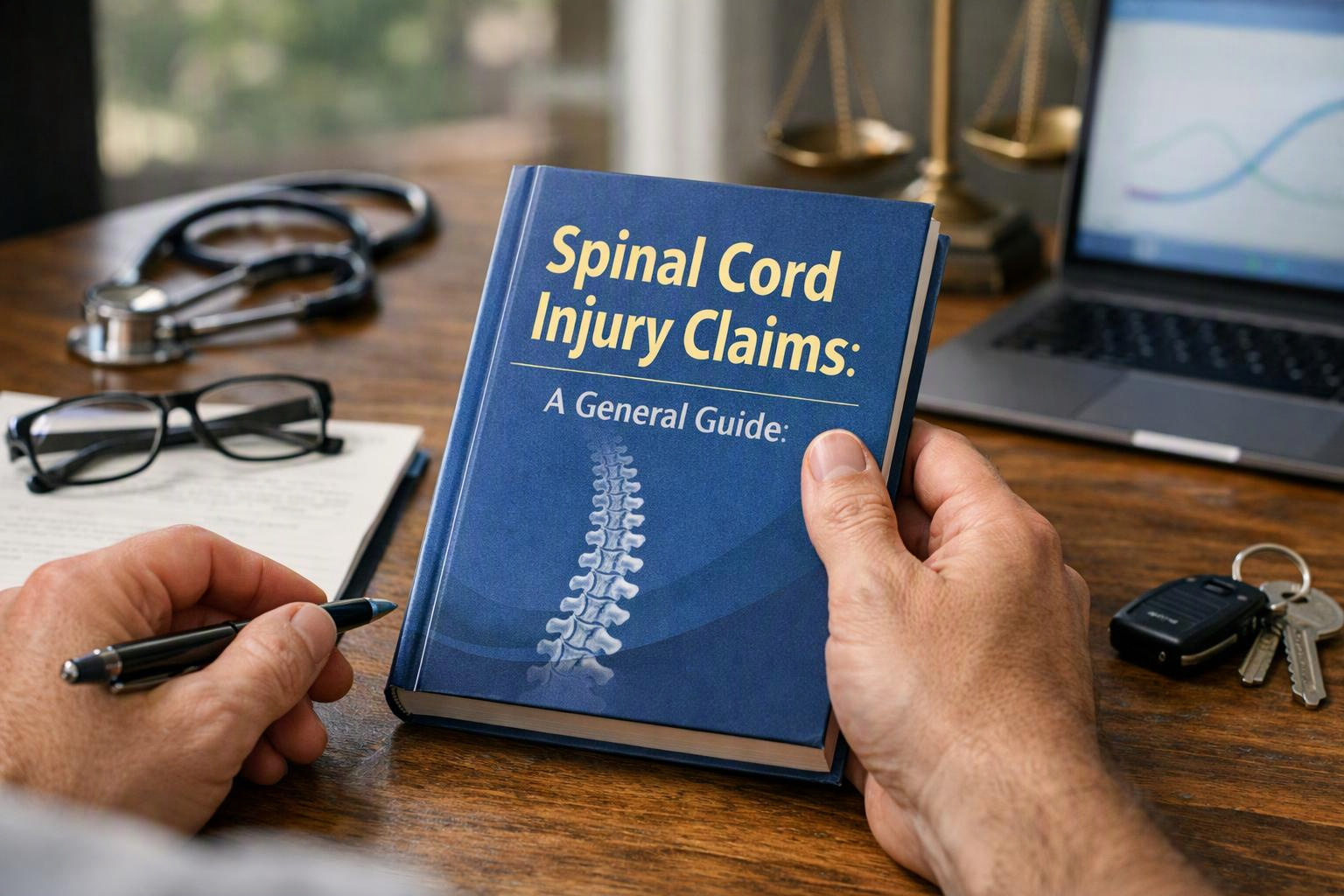
Spinal Cord Injury Claims: A General Guide
Spinal cord injury claims seek compensation for injury-related losses when another party may be legally responsible, and Atlanta Auto Law reviews liability, medical evidence, damages, and claim strategy with you.
Written by Ronnie Mabra
Request an EstimateWritten by Ronnie Mabra
What Is a Spinal Cord Injury Claim?
A spinal cord injury claim is a personal injury claim that seeks compensation for losses caused by a legally responsible party.
Spinal cord damage may affect the spinal cord, vertebrae, and nerves. A traumatic injury can cause paralysis, an incomplete spinal cord injury, or a complete spinal cord injury. The claim focuses on the connection between the negligent conduct, the injury, and the losses that followed.
We examine whether the facts support liability and whether the available evidence proves medical expenses, lost income, rehabilitation, future care, pain and suffering, and other harm.
When Could Another Party Be Legally Responsible?
Legal responsibility depends on whether another party owed a duty of care, breached that duty, and caused the spinal cord injury and resulting losses.
Negligence may involve unsafe driving, a dangerous property condition, or unsafe workplace conduct. A motor vehicle collision may support a claim when a driver's breach of duty caused the crash and spinal cord injury.
Premises liability may apply when a property condition caused the injury and the responsible party failed to address a known or reasonably discoverable hazard. A workplace injury may involve other liability questions, including whether a separate party contributed to the event.
We develop a liability analysis by reviewing the incident details, applicable duties, witness information, physical evidence, and the medical link between the event and the injury.
What Compensation Can a Spinal Cord Injury Claim Address?
Compensation can address documented medical care, rehabilitation, income loss, future needs, and the physical and emotional effects of the injury.
Economic damages may include financial losses that can be supported through records. Noneconomic damages may address pain and suffering, disability, emotional distress, and changes to daily life.
| Loss or need | What the claim may address |
|---|---|
| Medical expenses | Emergency treatment, surgery, medical treatment, follow-up care, and related billing records. |
| Rehabilitation | Physical therapy, occupational therapy, assistive devices, and a rehabilitation plan. |
| Future care | Long-term care, future treatment, life care needs, and support related to a lasting impairment. |
| Lost wages and earning capacity | Past wage loss and the effect of functional limitations on future work capacity. |
| Pain, suffering, and disability | Physical discomfort, emotional effects, permanent impairment, and changes in daily activities. |
How Should You Organize Evidence for a Serious Injury Claim?
Evidence for a serious injury claim should be organized by liability, medical condition, financial loss, and day-to-day impact so the claim can be evaluated clearly.
A clear file helps us compare the incident account with the medical history and financial records. It also helps show how the injury changed daily life.
Medical and Rehabilitation Records
Medical and rehabilitation records show the spinal cord injury, the treatment provided, and the expected prognosis.
We review emergency treatment, neurological evaluation, diagnostic imaging, surgery, physical therapy, occupational therapy, and the use of assistive devices. These records help connect the traumatic injury to the claimed losses and help explain future care needs.
Financial and Life-Impact Documentation
Financial and life-impact documentation shows how the injury affects income, care needs, and everyday living.
We examine medical bills, wage loss, earning capacity, home modifications, caregiving needs, daily activities, and emotional distress. A personal account can add context to records by showing how functional limitations affect ordinary tasks.
How Does Atlanta Auto Law Evaluate a Spinal Cord Injury Claim?
Atlanta Auto Law evaluates a spinal cord injury claim by examining how the injury happened, connecting the injury to the responsible party, documenting losses, and assessing the available legal strategy.
Our claim investigation begins with the incident details and available evidence. We perform a liability analysis that considers negligence, causation, comparative fault, and the conduct of each potentially responsible party.
Our team conducts a medical evidence review to understand the diagnosis, treatment, prognosis, rehabilitation plan, and future care needs. We also complete a damages assessment that considers medical expenses, lost income, economic damages, noneconomic damages, and life-impact evidence.
For an insurance claim, we review the insurer's position and the supporting records. We then evaluate settlement options, demand package materials, and litigation strategy based on the evidence and the available insurance coverage.
What Should You Consider Before Resolving the Claim?
A spinal cord injury settlement should be evaluated against documented losses, future care needs, liability issues, insurance coverage, and the effect of signing a release.
Future medical needs may continue after a settlement is offered. We review the medical outlook, permanent impairment, rehabilitation needs, long-term care, and life care needs before assessing whether the proposed resolution accounts for future harm.
A release of claims may end the legal action for the losses covered by its terms. We examine the release language and explain how it may affect claims connected to the injury.
Comparative fault may affect liability and the amount available for recovery. The claim deadline may also affect whether legal action remains available, so we identify the applicable deadline during the evaluation.
How Can You Begin Reviewing a Spinal Cord Injury Claim?
You can begin by gathering the incident details, medical records, financial documents, and insurance communications for Atlanta Auto Law to review.
Our legal evaluation focuses on the facts that show liability, causation, medical treatment, financial loss, and long-term impact.
Atlanta Auto Law offers Free Consultations to discuss the available information and next steps.
Questions About Spinal Cord Injury Claims
What evidence is most important in a spinal cord injury claim?
Atlanta Auto Law considers medical records, diagnostic imaging, treatment notes, incident evidence, financial records, witness information, and proof of daily-life changes important in a spinal cord injury claim. The strongest evidence connects the event to the injury and connects the injury to the claimed losses.
Can a spinal cord injury claim include future medical care?
Yes, a spinal cord injury claim can include future medical care when the available medical evidence supports continuing treatment, rehabilitation, assistive devices, caregiving, or long-term care needs. We review the prognosis and expected care needs as part of the damages assessment.
What happens if more than one party caused the spinal cord injury?
More than one party may share liability when the evidence shows that separate acts or omissions contributed to the spinal cord injury. We examine each party's duty, breach, causation, comparative fault, and available insurance coverage.
Should you accept an insurance settlement before treatment is complete?
You should evaluate an insurance settlement carefully before treatment is complete because the offer may not account for future medical care, permanent impairment, or the full effect of the injury. We review the offer, supporting evidence, insurance coverage, and release before discussing settlement options.
Atlanta Auto Law reviews spinal cord injury claims, evidence, liability, damages, and settlement options with you.