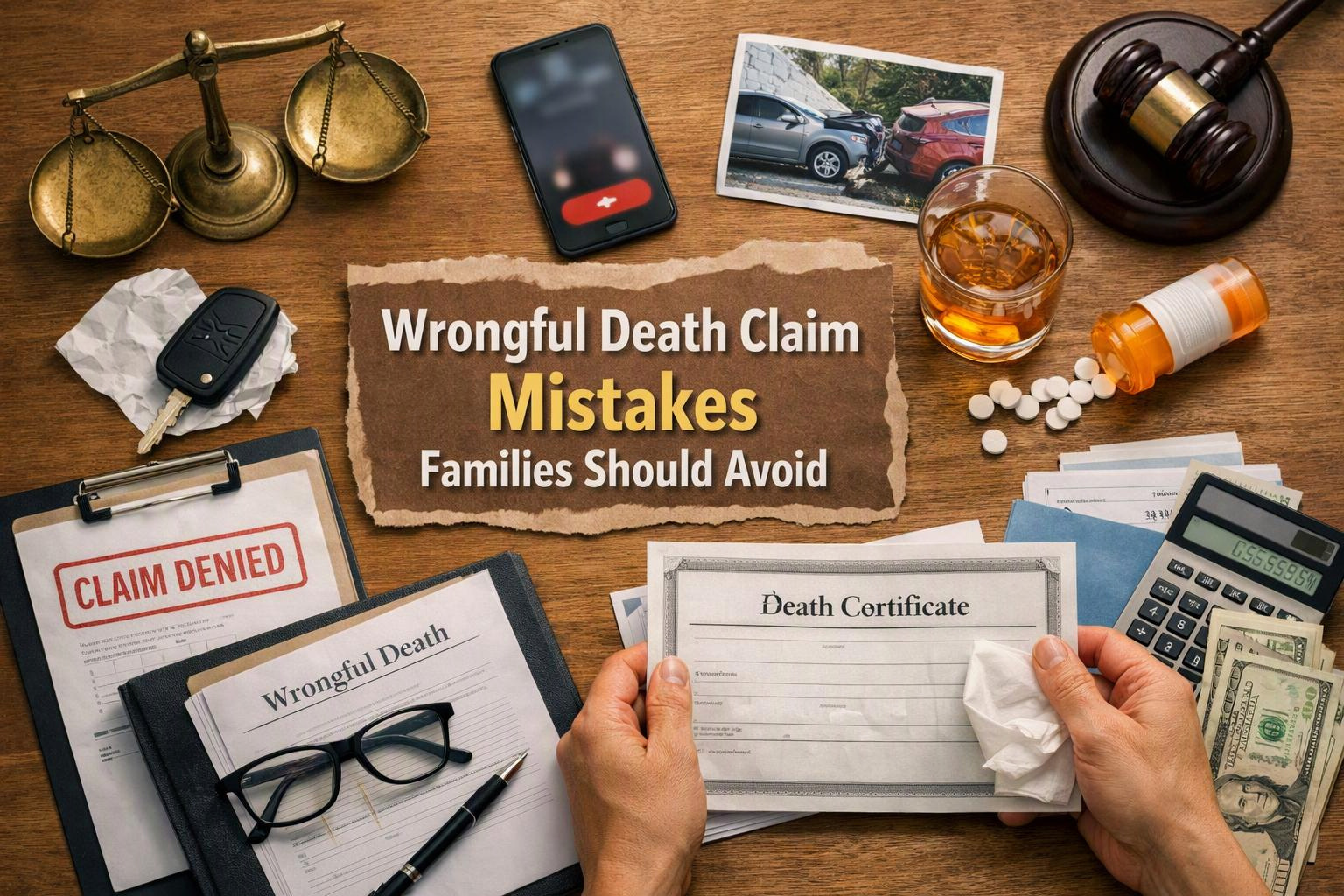
Wrongful Death Claim Mistakes Families Should Avoid
A wrongful death claim can be weakened by avoidable mistakes during evidence preservation, negotiation, filing, and damages evaluation. Atlanta Auto Law reviews the facts, preserves evidence, evaluates damages, and helps families make informed claim decisions.
Written by Ronnie Mabra
Request an EstimateWhy Wrongful Death Claims Require Careful Decisions
Wrongful death claims require careful decisions because family eligibility, estate administration, evidence, deadlines, and damages can affect the claim together.
A surviving family may have rights connected to the family member’s death, while the estate may have separate rights connected to losses before death. Legal damages can include financial and personal losses, but those losses need support from records and testimony.
We review the relationship between the surviving family, the estate, and the available evidence. That review helps us identify missing information before an insurance company or defendant uses the gap against the claim.
Wrongful Death Claim Mistakes Families Should Avoid
Claim preparation involves more than sending an insurance company a notice of loss. A defendant may dispute negligence, causation, damages, or the identity of the people who may bring a civil lawsuit.
We organize the claim around the accident investigation, family rights, estate issues, and documented losses. The review gives the family a clearer basis for responding to questions and evaluating a settlement offer.
Mistake: Waiting Too Long to Investigate the Death
Waiting to investigate a fatal accident can cause important evidence to disappear. Families often delay because they are grieving, handling funeral arrangements, or expecting an insurance company to explain what happened.
Witnesses may forget details, surveillance footage may no longer be available, and physical conditions may change. Those losses can make liability and causation harder to prove.
Our team begins evidence preservation by identifying available records, witness statements, photographs, vehicle information, and surveillance footage. We then use the available evidence to guide the claim investigation before the legal deadline creates additional pressure.
Mistake: Missing the Applicable Filing Deadline
The statute of limitations controls how long a family may have to bring a wrongful death lawsuit. Families may miss the claim deadline when they assume the insurance process extends the time for court filing.
Claim accrual can depend on the facts, the type of claim, and the role of the estate representative. Missing the filing deadline can prevent recovery even when the underlying evidence supports negligence.
We identify the possible filing deadlines during the initial review. We also coordinate the information needed from the personal representative so that estate administration and court filing decisions stay connected.
Mistake: Giving a Recorded Statement Without Preparation
A recorded statement can affect how an insurance adjuster evaluates liability, causation, and the family’s legal claim. Families may agree to an interview because the adjuster presents it as a routine part of the insurance process.
An uncertain answer, incomplete memory, or unsupported claim admission can later be treated as evidence. The statement may also leave out facts that support the family’s position.
We review the purpose and scope of a requested statement before the family responds. We help separate known facts from assumptions and direct communications through the claim process.
Mistake: Accepting an Early Settlement Offer
An early settlement offer may not account for future damages, estate issues, or the full value of the family’s losses. Families may accept because they need financial help during a difficult period or believe the offer will disappear.
A release agreement can limit later recovery after the insurance settlement is completed. The cost of accepting too soon can include losing the ability to seek compensation for losses that were not yet fully evaluated.
We review the settlement offer, proposed release agreement, insurance coverage, evidence, and damages before advising on claim valuation. Our settlement negotiation focuses on whether the proposed resolution addresses the supported losses.
Mistake: Failing to Identify Everyone Who May Have Rights
A wrongful death claim may involve a surviving spouse, children, parents, an estate, or another beneficiary with legally recognized rights. Families may overlook someone because they are focused on the person who handled funeral arrangements or insurance contact.
Leaving an eligible person out can create disputes, delay settlement, or affect how a recovery is divided. Family relationships and estate documents can also change which legal path applies.
We identify potential wrongful death beneficiaries and review the role of the personal representative. We address family-rights questions before settlement discussions become difficult to correct.
Mistake: Overlooking Evidence of Financial and Personal Loss
Financial and personal losses need evidence that connects them to the family member’s death. Families may focus on medical or funeral bills while overlooking lost income, loss of support, household services, and loss of companionship.
Missing records can weaken the damages calculation and make emotional losses harder to explain. The cost may be a recovery that does not reflect the family’s documented experience.
We gather medical records, employment records, financial documents, funeral expenses, and family documentation. We use those materials to organize lost income, loss of companionship, loss of support, and other supported damages.
Mistake: Assuming an Accident Report Proves the Whole Case
An accident report records an investigating officer’s observations, but it may not resolve every issue in a wrongful death claim. Families may treat the report as conclusive because it is an official record.
A police report may omit witness evidence, vehicle data, roadway conditions, or facts needed for crash reconstruction. It may also leave questions about negligence or comparative fault.
We compare the accident report with witness accounts, available records, photographs, and other evidence. Our liability analysis looks at the full event instead of relying on one document.
Mistake: Posting About the Case or Discussing It Publicly
Social media posts and public statements can become claim evidence. Families may post to seek support, explain what happened, or respond to comments about the fatal accident.
Public statements can create privacy concerns and give an insurance defense team material to interpret outside its original context. Posts may also expose disagreements about damages, family relationships, or the accident.
We explain how communications can affect the claim and help the family direct case questions through the legal process. We also review existing public statements for issues that may require careful handling.
Mistake: Treating an Estate Issue as Separate From the Claim
An estate issue can affect how a wrongful death claim is brought, documented, and resolved. Families may treat probate, the estate claim, and wrongful death beneficiaries as unrelated matters.
That separation can cause conflicting decisions, missing documents, or confusion about who may act for the estate. Estate administration can also affect how losses suffered before death are presented.
We coordinate the estate claim with the wrongful death claim and review the personal representative’s authority. Our process keeps probate information, estate records, and beneficiary rights connected to the legal strategy.
How to Protect a Wrongful Death Claim After a Fatal Accident
Families can protect a wrongful death claim by preserving documents, directing communications through the claim process, identifying potential beneficiaries, and recording financial and personal losses.
These steps help create a reliable record while we evaluate the available legal paths.
When Families Should Call Atlanta Auto Law
Families should call Atlanta Auto Law when a claim involves disputed fault, an insurance settlement, complex family rights, or evidence that may be difficult to preserve.
Our team can review a car accident claim connected to a fatal accident and explain how the facts may support a wrongful death claim. Calling early also gives us a better opportunity to organize evidence before it becomes harder to obtain.
Atlanta Auto Law can review the facts through our Wrongful Death Claims service. Contact us when the family needs a clear review of legal rights and the next claim decision.
What Happens When We Review a Wrongful Death Claim
We review the accident, identify the people and entities connected to the claim, organize damages evidence, and explain the available legal paths.
During claim intake, we discuss the fatal accident, the family structure, the estate, insurance communications, and known deadlines. We then organize accident evidence and conduct a liability analysis focused on negligence and causation.
Our damages review addresses medical records, employment records, lost income, funeral expenses, loss of support, household services, and loss of companionship. We use the available records to explain the financial and emotional losses connected to the death.
If settlement negotiation is appropriate, we review the offer and release agreement before the family makes a decision. When negotiation does not resolve the claim, we explain the issues involved in a wrongful death lawsuit and the court filing process.
Ronnie Mabra provides author attribution for this guidance on wrongful death claim mistakes.
Questions About Wrongful Death Claim Mistakes
Can a family member handle a wrongful death claim without hiring a lawyer?
Yes, a family member may handle some claim tasks, but Atlanta Auto Law can help when the claim involves disputed liability, estate administration, beneficiary rights, evidence preservation, or a settlement release. A family member may not recognize how one statement or agreement affects the larger legal claim.
What should a family do after an insurance company contacts them about a wrongful death claim?
A family should record the insurance company’s contact information, avoid guessing about disputed facts, and review requests for statements or documents before responding. The family should also preserve insurance correspondence and avoid accepting a settlement offer before damages and legal rights are evaluated.
Can social media posts affect a wrongful death lawsuit?
Yes, social media posts can affect a wrongful death lawsuit when an insurance defense team uses them to challenge the family’s account, privacy, damages, or relationship with the deceased person. Families should avoid discussing disputed facts or settlement issues publicly and should preserve relevant posts for review.
What happens if family members disagree about a wrongful death settlement?
Family disagreement can delay settlement and may require a review of beneficiary rights, estate authority, the proposed release agreement, and the legal path for resolving the dispute. We identify the people with decision-making rights and explain how the disagreement may affect negotiation or court proceedings.
Can a wrongful death claim include losses suffered before the person died?
Yes, a wrongful death claim may involve losses suffered before death when the facts and applicable law support an estate claim or survival action. We review medical treatment, records, estate administration, and the timing of the death to determine which losses may be presented through the available legal claims.