Motorcycle Accident Claims: A General Guide
Motorcycle accident claims require evidence of fault, injury, property damage, and financial loss. Atlanta Auto Law reviews the collision evidence, insurance issues, medical records, and claim strategy with you.
Written by Ronnie Mabra
Request an Estimate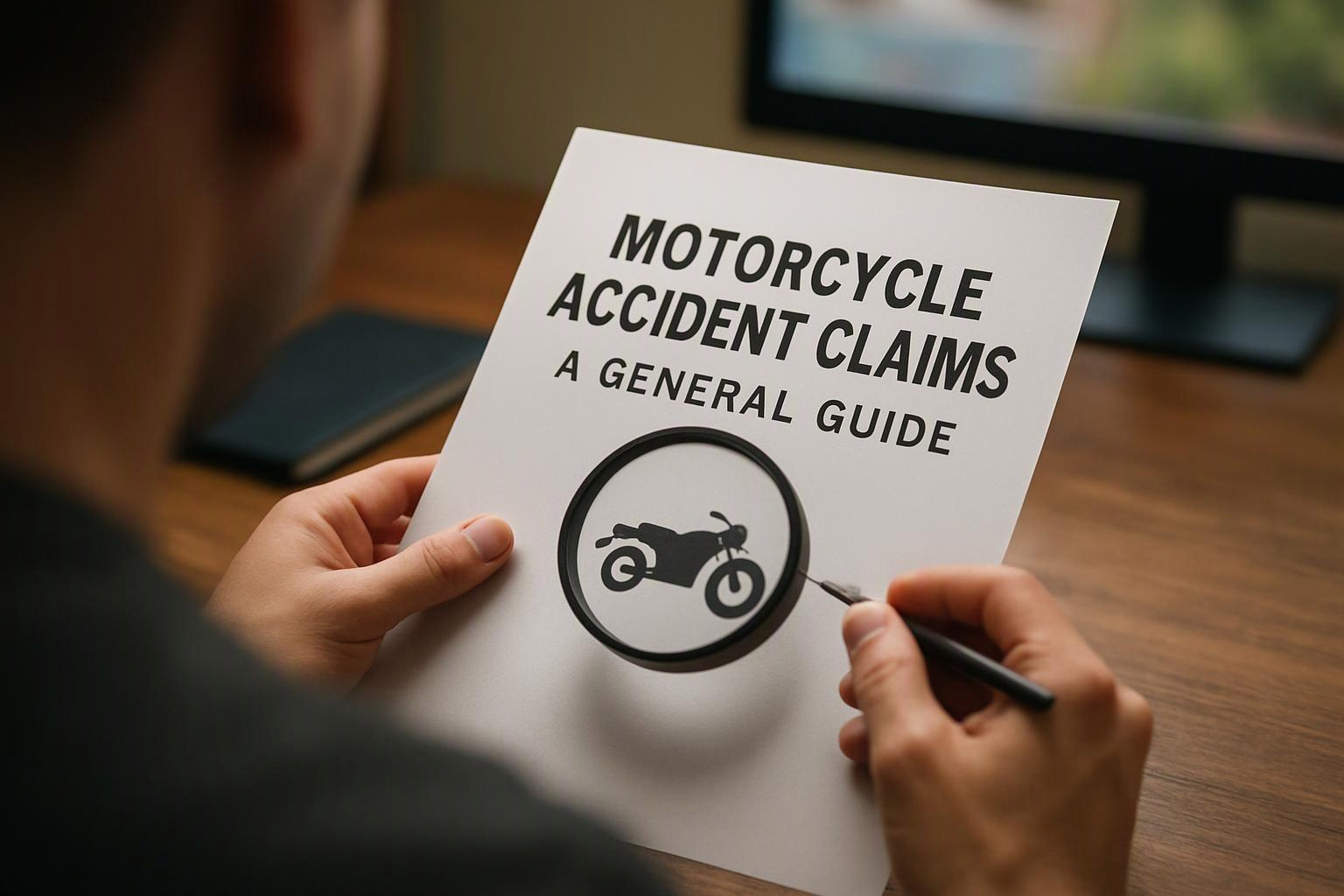
Author: Ronnie Mabra
What Is a Motorcycle Accident Claim?
A motorcycle accident claim is a legal demand for compensation based on another party's responsibility for crash-related injuries, losses, or property damage.
A motorcycle accident claim may involve personal injury, vehicle damage, lost wages, medical expenses, or a wrongful death claim. The central issue is liability, which means showing how driver negligence or another form of fault caused the traffic collision.
We examine the available facts, including the right of way, lane visibility, road conditions, and witness evidence. The claim then connects those facts to the damages that followed.
How We Handle a Motorcycle Accident Claim
Motorcycle accident claims move from evidence preservation and liability analysis to damages evaluation, insurer communications, negotiation, and litigation when appropriate.
Our team keeps the claim focused on evidence rather than assumptions about the motorcyclist. We communicate with the insurance adjuster and build the record needed for settlement negotiations or a civil lawsuit.
What Evidence Documents a Motorcycle Accident Claim?
Motorcycle accident claim evidence should connect the collision, the responsible conduct, the injuries, and the financial losses.
We organize documents so the claim tells a clear story. Each record should support a specific part of the accident investigation or damages analysis.
| Evidence | What it may show |
|---|---|
| Crash report or police report | The reported location, vehicles, statements, citations, and initial account of the traffic collision. |
| Photographs and video | Vehicle positions, road hazards, lane visibility, traffic signals, protective equipment, and damage. |
| Witness statements | Independent observations about speed, movement, right of way, and driver conduct. |
| Medical records | The nature of the injuries, medical treatment, causation, and continuing limitations. |
| Repair estimates and invoices | The motorcycle property damage, custom parts, riding equipment losses, and repair needs. |
| Insurance correspondence | Coverage positions, requests for information, claim denials, and settlement communications. |
| Income records | Lost wages, missed work, reduced earning ability, and other lost income. |
How Does Protective Equipment Affect a Motorcycle Claim?
Protective equipment can become evidence in an injury and causation analysis, but equipment issues do not by themselves decide who caused the crash or eliminate every claim.
A helmet, protective clothing, boots, gloves, and other gear may help explain the nature of an injury. We preserve and review the equipment when it may clarify how the injury occurred.
Insurance companies may argue comparative fault when they question helmet use or other protective choices. We separate those arguments from the evidence showing whether the driver caused the motorcycle crash.
How Motorcycle Claims Differ From Car Accident Claims
Motorcycle accident claims require focused analysis of rider visibility, protective equipment, road conditions, and motorcyclist stereotypes alongside ordinary negligence evidence.
We address the specific facts of the motorcycle crash while testing every claim about fault. The comparison below shows why the evidence review may differ.
| Issue | Motorcycle accident claim | Car accident claim |
|---|---|---|
| Visibility | The investigation may focus on whether the driver saw the motorcyclist, checked blind areas, and maintained lane awareness. | The investigation still considers visibility, but vehicle size and position may create different sight-line questions. |
| Road conditions | Surface defects, debris, standing water, and other road hazards may affect motorcycle control and injury severity. | Road conditions remain relevant, but the vehicle may respond differently to the same hazard. |
| Bias against motorcyclists | Assumptions about riding behavior can affect witness accounts and insurance evaluations. | The claim may involve fewer motorcycle-specific assumptions. |
| Vehicle damage | Damage may include the motorcycle, custom parts, riding equipment, and related property. | Damage usually centers on the car and items inside it. |
| Injury severity | The rider has less physical protection from impact, so medical evidence and long-term effects may require close review. | The vehicle structure and restraint systems may change the injury analysis. |
What Should You Prepare Before Pursuing a Claim?
Motorcycle accident claim preparation starts with preserving evidence and creating an organized record of treatment, insurance, property damage, and lost income.
Gather what you can without altering or discarding potential evidence. We can then review the materials and identify gaps that may affect the claim.
What Can Change the Value of a Motorcycle Accident Claim?
The value of a motorcycle accident claim depends on liability evidence, injury consequences, documented losses, available insurance coverage, and the effect of comparative negligence rules.
Liability may increase or reduce the claim depending on the strength of evidence about the negligent driver, traffic laws, and the motorcyclist's conduct. We assess comparative negligence carefully because a finding that more than one person contributed to the crash can affect recovery.
Injury severity, medical expenses, lost income, and future damages show how the crash changed the person's life. Property damage, custom parts, repair costs, and insurance coverage also shape the claim evaluation.
We review the available liability insurance and any applicable uninsured motorist coverage. We use the medical records and financial documents to support a settlement demand that reflects the documented damages.
When Should You Discuss a Motorcycle Accident Claim With Atlanta Auto Law?
You should discuss a motorcycle accident claim with Atlanta Auto Law when injuries, disputed fault, insurance resistance, or substantial losses make the claim difficult to evaluate or pursue.
Early advice can help preserve evidence, organize medical records, and manage insurance communication. We also review the legal deadline that may apply to the claim so important rights are not overlooked.
Our team evaluates the traffic collision, prepares the claim documentation, and develops a settlement demand when negotiation is appropriate. If the insurer will not resolve the claim fairly, we assess whether litigation is the proper next step.
Discuss your circumstances with Atlanta Auto Law through Motorcycle Accident Claims.
Questions About Motorcycle Accident Claims
Can I pursue a motorcycle accident claim if I was not wearing full protective equipment?
Yes, you may pursue a motorcycle accident claim without full protective equipment, but the equipment issue may affect injury causation or comparative fault. Atlanta Auto Law separates that issue from the evidence showing whether another driver caused the crash.
What happens if the driver who caused my motorcycle crash denies fault?
A driver's denial makes the evidence review more important, but it does not decide liability. We compare the driver's account with the police report, photographs, vehicle damage, witness evidence, traffic rules, and available video.
Can a motorcycle accident claim include damage to custom parts or riding equipment?
Yes, a motorcycle accident claim can include documented damage to custom parts and riding equipment when the collision caused the loss. Repair estimates, invoices, photographs, and purchase records can help support the property damage claim.
What should I do if an insurance adjuster asks for a recorded statement?
You should understand the purpose and scope of a recorded statement before providing one. We review the request, help protect accurate claim communication, and address questions that may affect fault or injury documentation.
Can I pursue compensation when the at-fault driver has no insurance?
Yes, compensation may still be available through applicable uninsured motorist coverage or another responsible source. We review the insurance policies, crash evidence, injuries, and damages to identify the available claim path.