What to Bring to a Personal Injury Attorney Consultation
Personal injury attorney consultations are best prepared with identification, accident or incident records, medical documents, insurance details, expense records, and written questions; Atlanta Auto Law reviews these materials to understand the claim and explain the next steps.
Written by Ronnie Mabra
Request an Estimate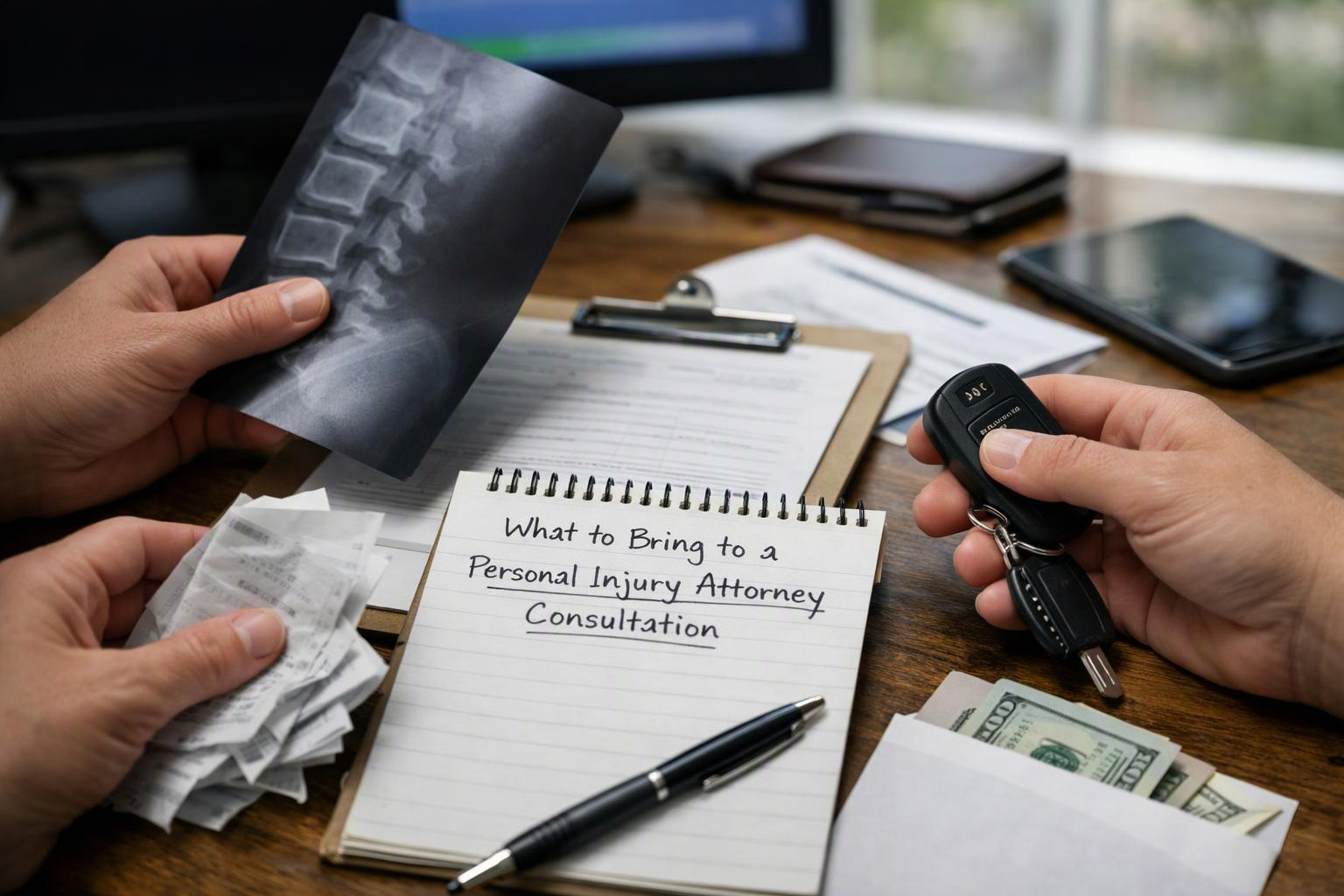
What Should You Bring to a Personal Injury Attorney Consultation?
A personal injury attorney consultation benefits from identification, incident records, medical information, insurance details, expense records, and a written account of what happened.
Bring what you already have, even if your file is incomplete. We use the available information to understand the accident or incident, identify possible liability, and assess financial losses such as medical bills, lost wages, and property damage.
Personal Injury Consultation Document Checklist
A personal injury consultation document checklist helps you gather the records most likely to support an initial case evaluation. Place documents in one folder, and keep digital copies when available.
Do not delay a consultation because you cannot collect every item. We can discuss what is available and identify which records may need follow-up.
Which Records Help Explain Your Injury Claim?
Records help connect the accident or incident to the injury claim, the losses, and the evidence supporting liability. The most useful document depends on the facts of the legal matter.
| Record | What it may help show |
|---|---|
| Accident report | The reported location, circumstances, involved parties, and initial account of the incident. |
| Medical records | The treatment history, injury symptoms, medical findings, and recommended care. |
| Billing records | Medical bills, payment information, and related out-of-pocket expenses. |
| Employment records | Missed work, lost wages, work restrictions, and other lost income information. |
| Insurance correspondence | Claim positions, requests for information, settlement discussion, and communications from an insurance adjuster. |
| Photographs | Visible injuries, vehicle or property damage, road conditions, and scene details. |
| Witness statements | Accounts from people who observed the incident or its immediate effects. |
We compare these records with your account of the event and the available liability evidence. Differences do not automatically defeat a claim, but they should be identified and addressed carefully.
How to Prepare for Your Personal Injury Claim
Claim preparation starts with a clear record of what happened and how the injury affected your life. The steps below organize the information we need for a focused consultation.
We use the timeline and supporting documents to separate confirmed facts from memories that may need verification. This process also helps us identify missing evidence and important claim deadlines.
What Should You Do Before the Consultation?
Before the consultation, organize the documents and notes that explain the incident, treatment, losses, and current concerns. Clear preparation lets us spend more time evaluating the injury claim.
Keep the original files when possible and avoid editing or deleting material that may relate to the claim. We can explain how the available evidence fits into the case review.
What Should You Handle Carefully Before Speaking With an Attorney?
Insurance communications, recorded statements, medical authorizations, and social media posts should be handled carefully because they can affect how the claim is understood.
An insurance adjuster may ask for details, documents, or a recorded statement before the claim is fully evaluated. Do not guess, speculate, or minimize your symptoms, and ask us to review significant requests when possible.
Read a medical authorization before signing it because its wording may affect the records released. Preserve social media content and avoid posting about the incident, treatment, fault, or settlement discussion while the claim is under review.
What Happens During a Personal Injury Attorney Consultation?
A personal injury attorney consultation reviews the incident, injuries, available evidence, insurance position, losses, and possible legal next steps.
We begin with the incident facts and your account of what occurred. We then review injury documentation, medical treatment, property damage, lost wages, and other damages that may support the claim.
Our case evaluation also considers liability, conflicting information, available insurance, and evidence that may need to be preserved. We explain possible legal strategy and answer questions about communication, documentation, and the next stage of the matter.
How Atlanta Auto Law Reviews Your Consultation Materials
Atlanta Auto Law reviews consultation materials by connecting the incident facts to the evidence, injury documentation, liability issues, and claimed damages.
Our team looks for a consistent incident timeline and compares it with the police report, photographs, witness information, medical records, bills, insurance correspondence, and employment records. We also identify gaps that may affect how the injury claim is presented.
We use the legal consultation to explain what the available evidence shows, what questions remain, and which next steps may protect the claim. To speak with our team, contact Personal Injury Attorney.
Author: Ronnie Mabra
Questions About Personal Injury Consultation Documents
Do I need every medical record before meeting with a personal injury attorney?
No, you do not need every medical record before a consultation. Atlanta Auto Law can review the records you have, discuss your treatment history, and explain which additional documents may help evaluate the injury claim.
Should I bring photos to a personal injury consultation?
Yes, bring photographs that show the scene, injuries, vehicles, property damage, or conditions connected to the incident. Original digital files can help preserve details that may not appear in printed copies.
Can I consult a personal injury attorney if I do not have a police report?
Yes, you can consult a personal injury attorney without a police report. Other evidence, such as photographs, medical records, witness information, insurance records, and your incident timeline, may help explain what happened.
What questions should I ask during a personal injury attorney consultation?
Ask how the available evidence relates to liability, damages, insurance communication, medical authorization, recorded statements, claim deadlines, and possible legal strategy. Written questions help you remember the concerns that matter most to your injury claim.