Dog Bite Claims: What to Document
Dog bite claims require documentation of the incident, injuries, medical treatment, dog ownership, witnesses, photos, expenses, and related losses. Atlanta Auto Law reviews this evidence to help organize the claim and identify what additional records may be needed.
Written by Ronnie Mabra
Request an Estimate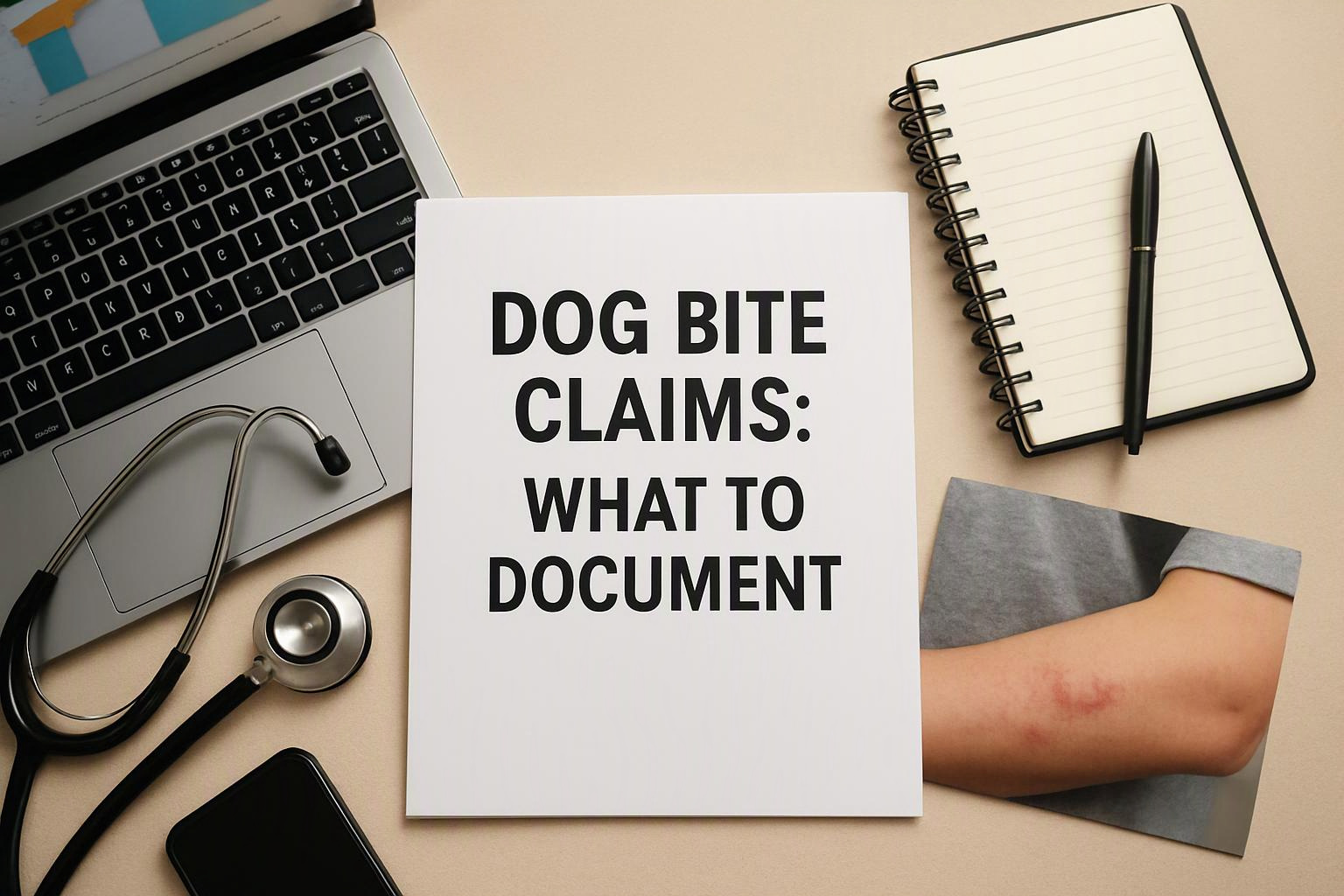
Dog bite claims should document what happened, who owned or controlled the dog, how the injury was treated, and what losses followed. We use these records to connect the dog bite injury to the medical care, financial losses, and liability evidence in the claim.
Written by Ronnie Mabra.
What Should You Document After a Dog Bite?
A dog bite claim should document the event, the dog owner, the injury, the treatment, and the losses that followed. Clear records help preserve details that may become harder to confirm later.
Document the incident while the facts are fresh. Note where the bite happened, what the dog did, whether the dog was leashed or contained, and what you did immediately afterward.
Photograph the injury and any torn or damaged clothing. Continue documenting the injury progression when swelling, bruising, scarring, or other changes appear.
Identify the dog owner and collect witness information. Ask witnesses for a written witness statement when they are willing to explain what they saw.
Keep medical records, medical bills, prescription records, and follow-up care information. Track lost wages, out-of-pocket expenses, and any property damage connected to the attack.
How to Prepare Your Dog Bite Claim Evidence
Claim evidence should be arranged by the issue it helps establish. This makes it easier to connect the incident report, medical care, ownership information, and financial losses.
Use a claim file that keeps original records safe and places copies in an organized order. The table below shows how each type of record can support an insurance claim or liability investigation.
| Record | What it can help show | How to preserve it |
|---|---|---|
| Incident report | The reported location, circumstances, and response | Keep the report and any related reference information |
| Medical records | The dog bite injury, treatment, and ongoing care | Request copies from each medical provider |
| Photographs | The injury progression, scene, clothing, or property damage | Keep original files and backup copies |
| Witness statements | What other people saw or heard | Save written statements and contact information |
| Expense records | Medical bills, travel costs, lost wages, and property damage | Keep receipts, pay records, and employer documents |
| Insurance information | The insurer, claim contact, and communications about the claim | Preserve letters, emails, forms, and recorded statements |
Organized supporting documentation helps us identify missing records. We also review whether the records consistently describe the incident, treatment, and losses.
Follow These Steps to Document a Dog Bite Claim
A dog bite claim becomes easier to evaluate when each record is collected in a clear sequence. Follow-up documentation can also show how the injury affects treatment, work, and daily life.
These steps create a practical claim file without replacing medical care or legal guidance.
We use the claim file to compare the incident details with the injury records and loss documentation. This process helps reveal gaps before the insurance claim is evaluated.
What Evidence Helps Establish Responsibility?
Liability evidence that identifies the dog and its owner, explains where and how the bite occurred, and supports witness or reporting records can help establish responsibility.
Dog ownership evidence may include statements from the owner, property records, animal control records, or communications about the dog. Dog custody evidence can also matter when someone other than the owner was caring for or controlling the animal.
Prior animal behavior may be relevant when records or witnesses show earlier aggressive conduct, warnings, or complaints. Local reporting records and rabies vaccination records may help identify the dog and confirm the response after the bite.
Incident conditions can include the dog's location, barriers, leash use, warnings, lighting, and the actions of people nearby. We examine these facts with witness evidence to assess how the attack occurred.
Dog Bite Claim Preparation Checklist
A dog bite claim preparation checklist helps keep important records from being scattered. Complete these tasks as soon as you can safely do so.
The checklist also gives us a clearer starting point when we review the claim.
Do not edit original photographs or discard damaged items before they are reviewed. Keep a separate copy of each important record for your personal files.
How Atlanta Auto Law Reviews Dog Bite Documentation
Atlanta Auto Law reviews the incident evidence, injury records, liability information, and loss documentation to identify gaps and organize the dog bite claim.
We begin with the account of what happened and compare it with the incident report, photographs, witness information, and animal control records. Our team then reviews medical documentation, medical bills, ongoing treatment, and the effect of the injury on work and daily life.
Liability analysis focuses on ownership, custody, prior animal behavior, and the conditions surrounding the bite. Damages documentation may include medical expenses, lost wages, property damage, and pain and suffering.
Our review is designed to turn scattered records into a clear claim file. We explain what the existing evidence supports and what additional supporting documentation may be needed.
What Should You Do With Your Records After a Dog Bite?
A dog bite claim file should keep original records secure, preserve digital backups, and organize written communications in one place.
Keep original medical records, reports, receipts, and photographs unchanged. Use digital backups for important files, but do not rely on a single device or account.
Preserve communications with the dog owner, insurance company, medical providers, employers, and reporting agencies. Save insurance correspondence, claim forms, letters, emails, and notes about phone calls.
Protect your privacy when sharing records. Send only information that relates to the dog bite claim, and keep copies of anything you provide.
Questions About Documenting Dog Bite Claims
Should I take pictures of a dog bite?
Yes, photographs can document the dog bite injury, injury progression, damaged clothing, and the scene. Atlanta Auto Law reviews these images with the medical records and other claim evidence.
What medical records are needed for a dog bite claim?
Medical records for a dog bite claim include the initial evaluation, treatment notes, prescriptions, follow-up care, referrals, and records describing ongoing symptoms. Medical bills and treatment instructions can help document the related damages.
Can witness information help with a dog bite claim?
Yes, witness information can support the account of what happened, identify the dog owner, and explain the incident conditions. Preserve names, contact information, and any written witness statement.
Should I report a dog bite to animal control?
Yes, reporting a dog bite to animal control can create a record of the incident and help identify the dog and its owner. Keep the animal control report and any related communications in the claim file.
What should I do if the dog owner denies responsibility?
If the dog owner denies responsibility, preserve photographs, medical records, witness information, animal control records, and all written communications. Atlanta Auto Law reviews that evidence to assess ownership, custody, incident conditions, liability, and damages.
Atlanta Auto Law can review your dog bite claim evidence and help organize the records that support the injury, liability, treatment, and damages. Contact us to discuss the claim file and the next steps.