Slip and Fall Claims: What to Consider
Slip and fall claims require evidence of the hazard, responsible-party knowledge, causation, and resulting losses. Atlanta Auto Law reviews the available evidence, helps organize the claim, and explains the next steps.
Written by Ronnie Mabra
Request an Estimate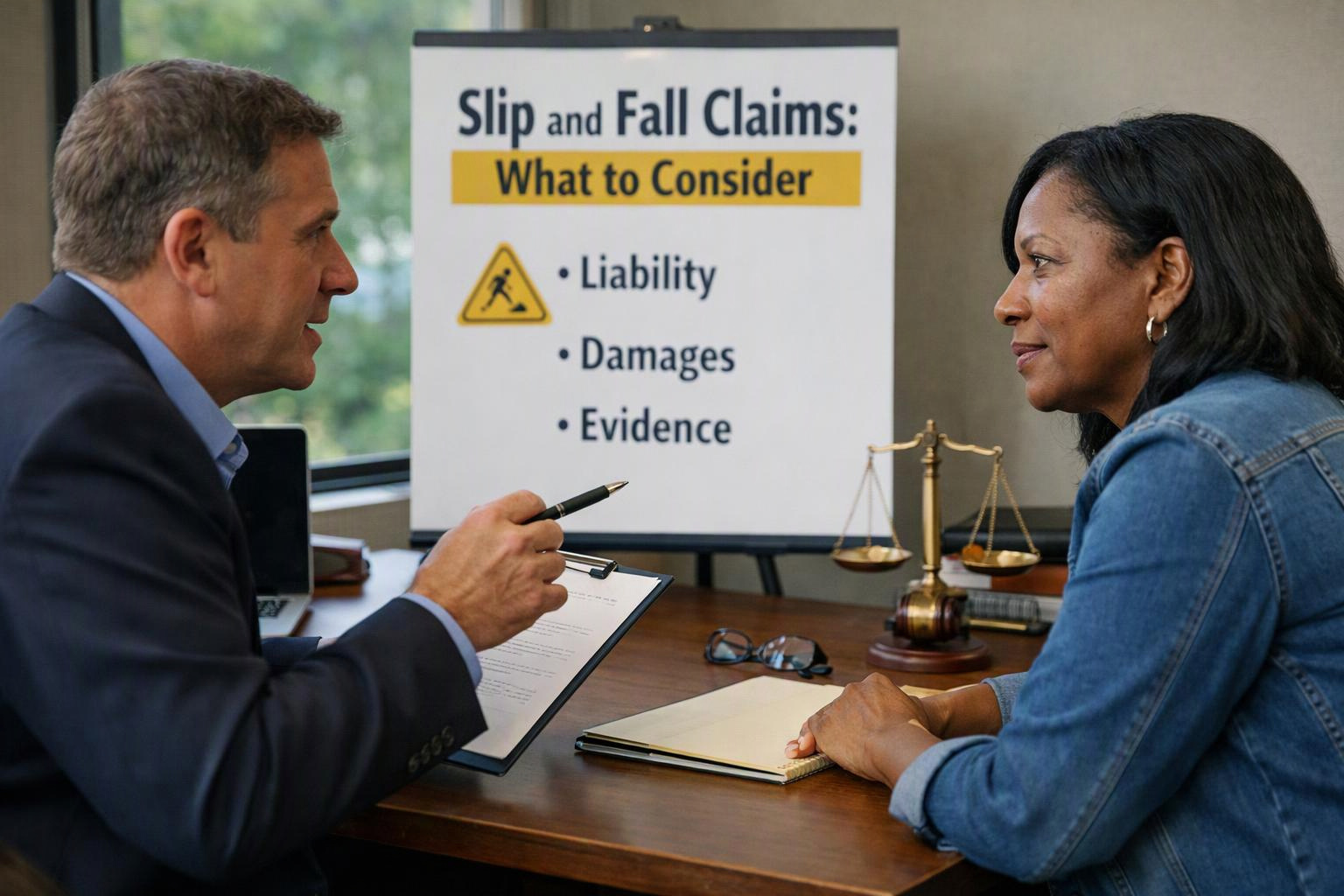
Guidance provided by Ronnie Mabra.
What Should You Consider Before Pursuing a Slip and Fall Claim?
Slip and fall claims depend on showing that an unsafe condition caused an injury and that the responsible property party may have known about or caused the condition.
A premises liability claim may involve a property owner or property occupier. The responsible party may have had a duty of care to inspect the property, correct hazards, or provide a warning.
Common hazards include a wet floor, uneven surface, poor lighting, debris, or a lack of warning. The claim also requires a causal connection between the hazard and the bodily injury, along with proof of damages such as medical bills, lost income, and pain and suffering.
How Do You Document a Slip and Fall Claim?
Documenting a slip and fall claim starts with preserving information about the incident scene and the unsafe condition. Each record should help connect the hazard, the responsible party, the injury, or the resulting loss.
Use the following steps while the details remain available and clear in your memory.
Evidence preservation matters because conditions can change after a fall. Our team organizes photographs, records, witness statements, and other claim documentation for review.
What Does Atlanta Auto Law Review During a Claim Evaluation?
Atlanta Auto Law reviews the accident facts, the property relationship, available notice evidence, injury documentation, and potential defenses before explaining the claim options.
Our claim evaluation examines property ownership and property control. We determine whether the property owner, property occupier, management company, or another party controlled the area where the fall occurred.
We look for actual notice or constructive notice of the hazard. Maintenance records, inspection practices, employee reports, photographs, and surveillance footage may help show how long a dangerous condition existed or whether the responsible party caused it.
We also examine comparative fault. An insurer may argue that the injured person failed to pay attention, ignored a warning, or contributed to the fall. We compare that defense with the available liability evidence and the facts of the scene.
What Are the Main Steps in Preparing a Slip and Fall Claim?
Preparing a slip and fall claim follows a process that connects the incident facts to liability, causation, and damages. Our team uses each step to identify proof and address gaps before making a claim decision.
Settlement and litigation decisions depend on the evidence and the issues in dispute. We explain the available options so you can make an informed decision about the claim process.
What Information Belongs in a Slip and Fall Claim Preparation Table?
A claim preparation table connects each claim issue to the proof needed and the action that follows. This structure helps keep liability evidence, injury documentation, and financial loss organized.
The table can be updated as new records or witnesses become available.
| Claim issue | Supporting evidence | Responsible party | Injury documentation | Financial loss | Action to take |
|---|---|---|---|---|---|
| Unsafe condition | Photographs, witness statement, incident report | Property owner or property occupier | Medical records describing the injury | Medical bills and out-of-pocket expense | Preserve photographs and identify witnesses |
| Notice of hazard | Maintenance records, inspection records, surveillance footage | Party responsible for property control | Treatment notes and follow-up records | Lost income and wage loss | Request preservation of relevant records |
| Causation and damages | Incident account and medical documentation | Party whose conduct or omission caused the risk | Diagnosis, restrictions, and medical treatment | Pain and suffering and documented expenses | Keep records current and consistent |
Our team uses this information to compare the claimed losses with the supporting proof. We also identify missing records that may affect settlement evaluation or litigation preparation.
What Should You Gather Before Discussing a Slip and Fall Claim?
Gathering basic records before discussing a slip and fall claim gives the initial review a clearer factual foundation. Keep original documents when possible and make a separate note of facts you still need to confirm.
Use this checklist to prepare your claim materials.
Do not alter photographs or discard notes about the incident. Our team can help organize these materials for a focused claim evaluation.
How Can You Protect the Strength of a Slip and Fall Claim?
You can protect a slip and fall claim by preserving evidence, following medical guidance, keeping organized records, and avoiding inaccurate or speculative statements.
Keep a consistent account of where and how the fall occurred. Describe what you know directly, and identify details you do not remember instead of guessing.
Continue appropriate medical follow-up and keep medical records, bills, and treatment instructions. Record out-of-pocket expenses and work losses as they occur.
Preserve photographs, messages, incident reports, and other evidence. An insurance adjuster may ask for a claim statement, but you should review the request carefully before giving an account that could affect the insurance claim.
Legal deadlines can affect the ability to pursue a claim. We review the relevant deadline issues and help protect the claim documentation needed for the next stage.
What Should You Ask About Your Slip and Fall Claim?
Questions about a slip and fall claim should focus on claim strength, the liability theory, evidence gaps, the responsible party, and damages.
Ask which facts support notice of the hazard and whether the property owner or property occupier controlled the area. Ask what evidence may prove causation and what information could support medical bills, lost income, and pain and suffering.
Ask how comparative fault may affect the claim and whether surveillance footage, maintenance records, or an incident report may change the evaluation. Ask what legal strategy fits the available evidence and how settlement or litigation may proceed.
Atlanta Auto Law discusses these questions during a claim review and explains practical next steps. You can contact our team through Slip and Fall Claims.
Questions About Slip and Fall Claims
What evidence helps prove a slip and fall claim?
Atlanta Auto Law reviews photographs of the hazard, witness information, the incident report, medical records, maintenance records, surveillance footage, and insurance communications to evaluate liability, causation, and damages.
Can a slip and fall claim continue if the property owner denies responsibility?
Yes, a slip and fall claim can continue when available evidence supports a liability theory despite a denial. The evaluation may examine notice, property control, maintenance practices, witness accounts, and comparative fault.
What should you say to an insurance adjuster after a slip and fall?
You should give accurate information about the incident and avoid guessing about facts, fault, or the full extent of an injury. Review requests for a recorded statement or broad medical authorization before responding.
How can property surveillance footage affect a slip and fall claim?
Property surveillance footage may show the condition of the area, how long the hazard was present, whether a warning existed, and what happened during the fall. Preserving the footage can be important because recorded conditions may change or be overwritten.
When should you contact Atlanta Auto Law about a slip and fall injury?
You should contact Atlanta Auto Law when you have a slip and fall injury and need help preserving evidence, identifying the responsible party, reviewing medical records, or understanding the claim process.
Atlanta Auto Law reviews the facts, preserves the available evidence, and explains the claim options based on the injury and property circumstances.
Contact our team to discuss your slip and fall claim.